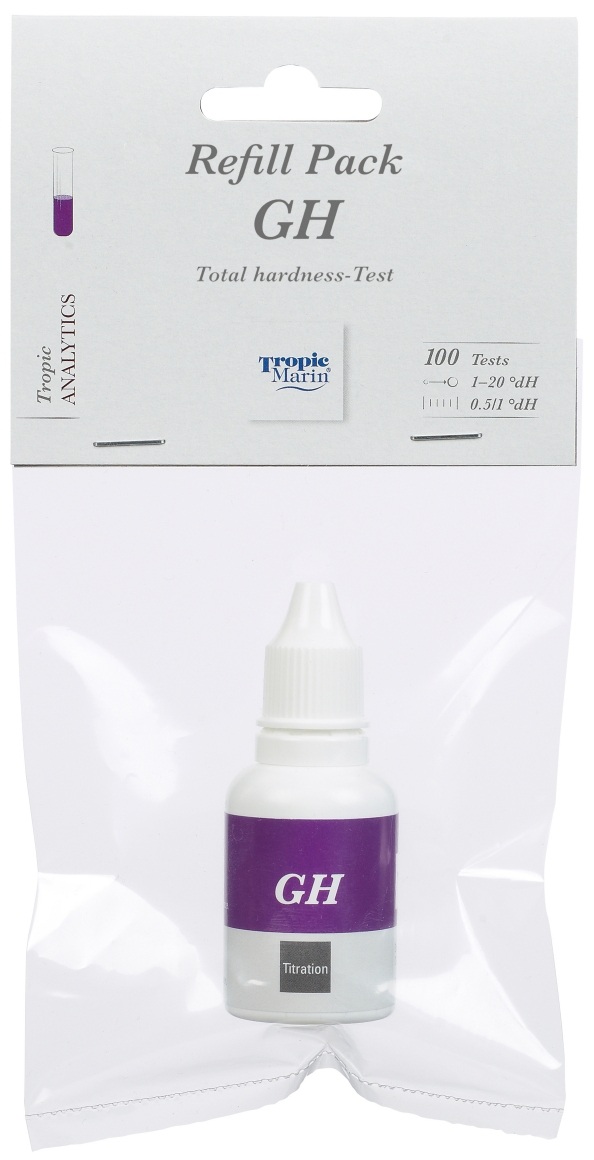
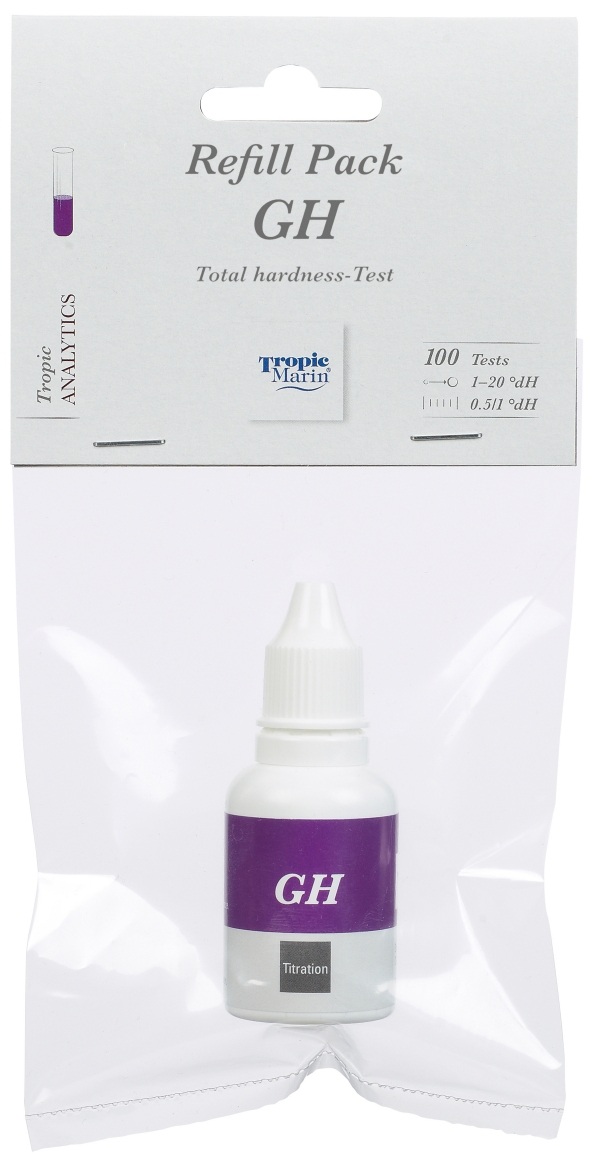
The total hardness (GH) constitutes the amount of dissolved magnesium and calcium salts in the water. If the concentration of these salts is low, the water is referred to as soft water, if the concentration is high, the water is referred to as hard water. The reading is usually given in degrees of German hardness (°dH), whereby 1 °dH equates to 10 mg per litre of dissolved calcium oxide. You can find a table for converting this unit into other common units in the instructions for use. The concentration of these salts in the water affects the organic functions of the fish and plants. Therefore, it should be tested on a regular basis. The optimum total hardness value depends on the species of fish. Many African (e.g. aphyosemion) and South-east Asian species (e.g. trichogaster) cope with hard water easily. On the other hand, South American tetra, for example, need soft water to feel comfortable. A hardness level of 3 -10 °dH is favourable in a freshwater aquarium. Ask your specialist retailer for the correct water hardness level for your fish.